CESSNA 172 near London, OH — 2023-04-18
- Date
- 2023-04-18
- Location
- London, OH, USA
- Airport
- UYF
- Aircraft
- CESSNA 172
- Registration
- N734GB
- Category
- Airplane
- Highest injury
- Fatal
- Fatalities
- 2
- Phase of flight
- Approach
Probable cause
The flight instructor’s failure to maintain adequate airspeed and his exceedance of the airplane’s critical angle of attack, which resulted in an aerodynamic stall at an altitude too low for recovery.
NTSB narrative
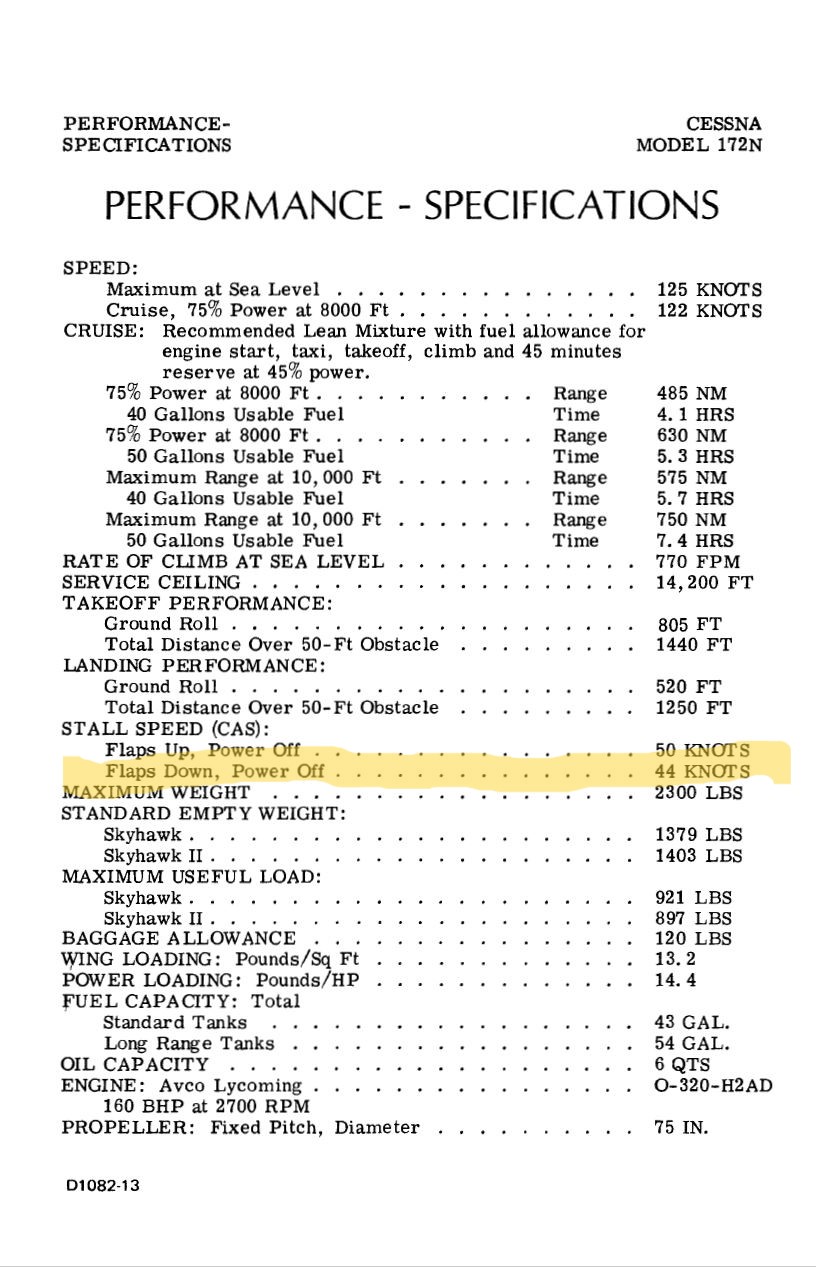
The accident occurred during what was likely the student pilot’s first instructional flight. According to ADS-B data, the airplane was on final approach to the runway for landing in gusty wind conditions, when the accident occurred. The airplane’s calculated airspeed during the final approach was decelerating, and about 150 ft from the runway threshold, it was about 18 knots above its published stall speed given its configuration. The airplane subsequently impacted the ground about 1 ft from the edge of the runway in a near-vertical nose-down, left-wing-low attitude and came to rest inverted. Postaccident examination of the airplane revealed that the damage signatures observed on the wreckage were consistent with a relatively low energy impact, with the majority of the damage being to the forward portion of the airframe. The engine and propeller were compressed aft and up into the fuselage. The flaps were found extended to the 40° position. No evidence of any preimpact mechanical malfunctions or failures were identified that would have precluded normal operation of the airplane. The observed impact signatures were indicative of the airplane encountering an aerodynamic stall at low altitude. Postaccident toxicological testing showed that the student pilot had used the antidepressant medication venlafaxine. This medication and some conditions it may be used to treat have some potential to impair performance. However, considering the accident circumstances, including the student pilot’s limited baseline piloting skill and experience, his limited flight safety responsibilities on the first instructional flight, and the presence of the qualified flight instructor, it is unlikely that the student pilot’s venlafaxine use, or any associated underlying condition, contributed to the accident. Given the decelerating airspeed trend observed in the recorded data and the impact attitude of the airplane, it is likely that the flight instructor did not ensure that sufficient airspeed was maintained and the airplane’s critical angle of attack was exceeded, which resulted in an aerodynamic stall while on final approach to land.
Analysis
- Primary failure mode
- Human factors
- First missed decision gate
- Instructor could have aborted the approach due to low airspeed near stall speed.
NTSB coding
Evidence available
- ADS-B / radar
- Photos
- 13 docket documents
Docket documents13
- STATEMENT OF PARTY REPRESENTATIVES TO NTSB INVESTIGATIONform
- MEMORANDUM FOR RECORD - AIRPORT MANAGER INTERVIEW SUMMARYinterview
- EXCERPT FROM PILOT OPERATING HANDBOOKother
- MAINTENANCE RECORDSother
- MEMORANDUM FOR RECORD A�� CALCULATED GROUNDSPEED AND AIRSPEEDother
- TOXICOLOGY TESTING RESULTS - FLIGHT INSTRUCTORother
- TOXICOLOGY TESTING RESULTS - STUDENT PILOTother
- INVESTIGATIVE PHOTOSphotos
- ADS-B FLIGHT PATH (.KMZ FORMAT)radar
- ADS-B RAW DATAradar
- MEDICAL FACTUAL MEMORANDUM FOR RECORDreport
- SURVIVAL FACTORS SPECIALIST REPORTreport
- WRECKAGE EXAMINATION SUMMARYwreckage
Related mishaps
- CESSNA 172
2025-11-06 · Oxford, CT
- AIR VEV INC AIR ZERO2
2025-10-23 · Indiantown, FL
- ROBINSON HELICOPTER R22
2025-10-21 · Springfield, MO
- STINSON 108-8
2025-06-25 · Alexander Creek, AK
- Golden Circle Air T-Bird
2025-05-05 · Dallas Center, IA
- LUSCOMBE 8A
2025-02-11 · Hampton, NH