PIPER PA-28RT-201T near Brownsville, TN — 2021-04-21
- Date
- 2021-04-21
- Location
- Brownsville, TN, USA
- Aircraft
- PIPER PA-28RT-201T
- Registration
- N4303G
- Category
- Airplane
- Highest injury
- Fatal
- Fatalities
- 2
- Phase of flight
- Descent
Probable cause
The student pilot’s continued visual flight rules flight into night instrument meteorological conditions, which resulted in spatial disorientation and a rapid uncontrolled descent into terrain. Contributing to the accident were the self-induced and external pressures that likely influenced the pilot’s decision to both initiate and continue the flight.
Contributing factors
Contributing to the accident were the self-induced and external pressures that likely influenced the pilot’s decision to both initiate and continue the flight.
NTSB narrative
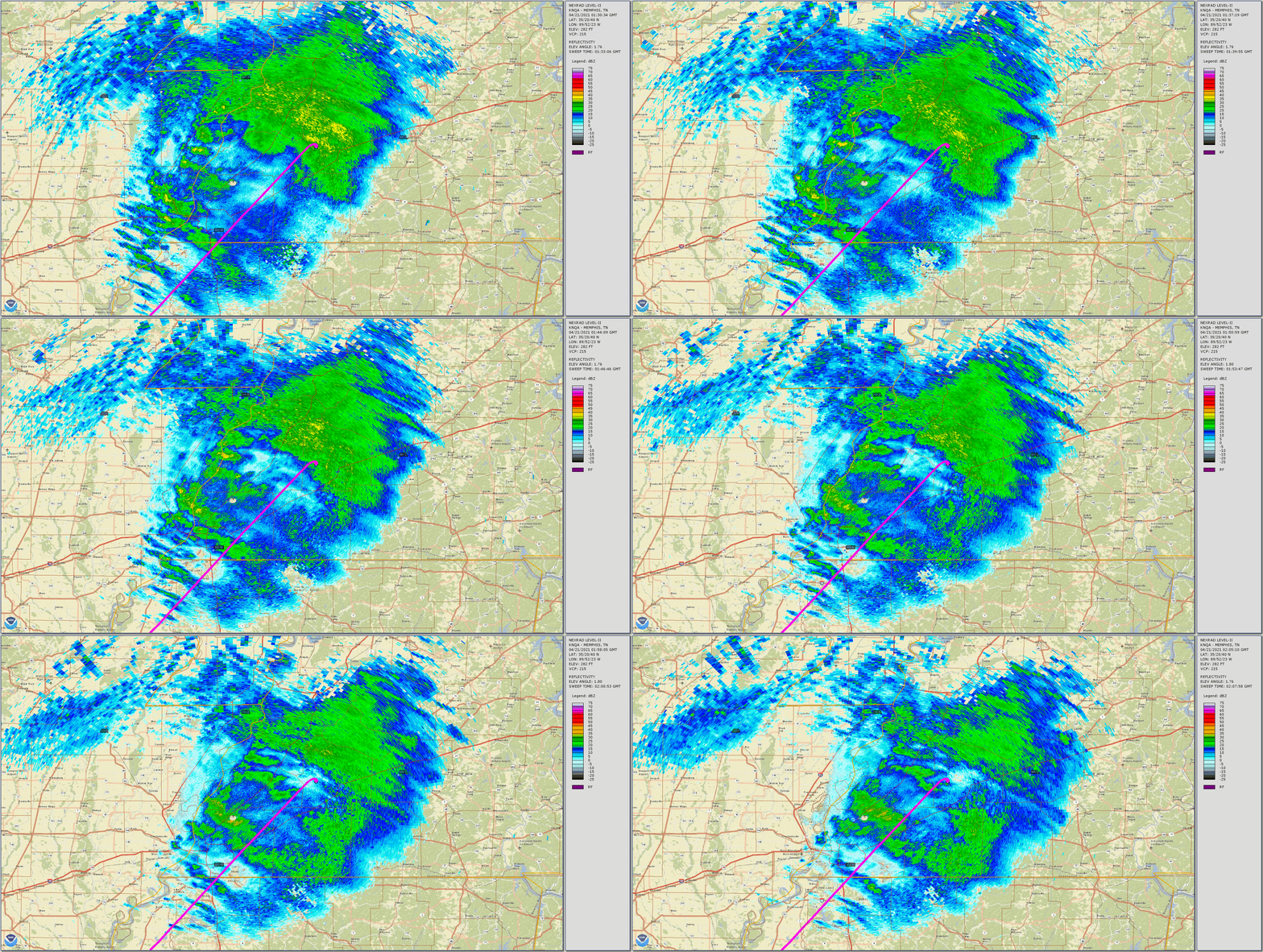
The flight instructor and student pilot discussed a solo cross-country flight the morning of the accident so that the student could see his father, who had been recently hospitalized unexpectedly. The instructor provided the required solo cross-country route endorsement for the flight and expected that the pilot would depart early in the afternoon to avoid night and instrument meteorological conditions (IMC) moving into the destination area; however, the pilot departed several hours later, which resulted in much of the flight being conducted in night conditions. The pilot was receiving visual flight rules (VFR) flight following services from air traffic control at the time of the accident. As the pilot prepared to begin a descent from cruise altitude to the destination airport, he was advised by air traffic control of instrument flight rules (IFR) conditions immediately ahead and along the remainder of his route, and was told to maintain VFR. The controller provided alternate VFR airports and suggested a course to maintain VFR. The pilot acknowledged the information and advised that he would deviate to remain clear of the weather; however, flight track and weather information revealed that, about this time, the airplane likely entered IMC conditions, which included precipitation and clouds in addition to light to moderate turbulence. Shortly after entering the IFR conditions, the airplane entered a descending, tightening, rapidly accelerating spiral that continued until impact. The spiral was indicative of a pilot experiencing the effects of spatial disorientation, and the airplane reached an airspeed significantly greater than its never-exceed speed. Before entering the spiraling descent, the flight was cruising below the freezing level, which made the risk of airframe icing minimal. Examination of the airplane revealed no evidence of preimpact mechanical malfunctions or failures, and in addition, the propeller displayed multiple signatures that were indicative of an engine operating at high power. Review of the forecast conditions was consistent with the weather conditions encountered during the accident flight. Review of hourly observation weather data revealed that, had the pilot departed earlier in the afternoon as was expected from his flight instructor, the flight likely would have been completed in day VFR conditions. The pilot did not receive a weather briefing before departure, and what, if any, weather information the pilot reviewed before departing could not be determined. The pilot’s logbook showed that he had experience flying the accident route of flight in his past dual and solo flight training. The logbook entry for the previous solo flight contained a remark that the pilot diverted due to weather; however, that flight was conducted during daylight and the accident flight had self-induced and external pressures that likely affected the pilot’s desire to complete the flight. Toxicology testing revealed evidence of the pilot’s use of multiple potentially impairing substances, but no blood levels were available; therefore, whether the pilot was experiencing any effects from his use of these substances could not be determined. However, given the circumstances surrounding the accident, it is unlikely that effects from his use of these substances contributed to this accident.
Analysis
- Primary failure mode
- VFR into IMC
- First missed decision gate
- Pilot should have aborted descent due to deteriorating weather conditions.
NTSB coding
Evidence available
- ATC audio
- ADS-B / radar
- Photos
- 23 docket documents
Docket documents23
- ERA21FA189 - FAA AIR TRAFFIC CONTROL RADAR_AUDIOatc
- AIRCRAFT PERFORMANCE STUDYform
- MEMORANDUM FOR RECORD (NTSB MEDICAL INFORMATION)form
- RELEASE OF AIRCRAFT WRECKAGE, NTSB FORM 6120.15form
- STATEMENT OF PARTY REPRESENTATIVES TO NTSB INVESTIGATIONform
- ADDITIONAL WEATHER DATA ATTACHMENTother
- ERA21FA189 KMLother
- FOREFLIGHT ROUTE OF FLIGHT DATAother
- NTSB MEMO FOR RECORD (FAA ON-SITE NOTES)other
- NTSB MEMO FOR RECORD (FAMILY MEMBER)other
- NTSB MEMO FOR RECORD (LOGBOOK REVIEW)other
- RECORD OF CONVERSATION (ACQUAINTANCE OF PILOT)other
- RECORD OF CONVERSATION (AIRPORT GM_FUEL RECEIPT)other
- RECORD OF CONVERSATION (FLIGHT INSTRUCTOR)other
- RECORD OF CONVERSATION (MECHANIC)other
- STUDENT PILOT ENDORSEMENTS LOGBOOKother
- NTSB METEOROLOGY FACTUAL REPORT - ATTACHMENT 2photos
- ERA21FA189 - ADS-B FILEradar
- NTSB METEOROLOGY FACTUAL REPORT - ATTACHMENT 1radar
- AIRFRAME AND ENGINE EXAMINATION REPORTreport
- NTSB METEOROLOGY FACTUAL REPORTreport
- NTSB METEOROLOGY FACTUAL REPORT - ATTACHMENT 3report
- TOXICOLOGICAL REPORTreport
Related mishaps
- Cirrus SR22
2019-02-16 · Ely, NV · 2 fatalities
- CESSNA 208B
2018-04-11 · Atqasuk, AK
- DEHAVILLAND BEAVER DHC 2 MK.1
2016-09-30 · Lopez Island, WA
- CESSNA 172N
2016-01-04 · Wayne, NE · 1 fatality
- PIPER PA 28-181
2014-12-30 · Vaughn, NM · 2 fatalities
- DIAMOND AIRCRAFT IND INC DA 40
2013-08-30 · Blairsville, GA