Agusta A109 near New York, NY — 2019-06-10
- Date
- 2019-06-10
- Location
- New York, NY, USA
- Airport
- 6N5
- Aircraft
- Agusta A109
- Registration
- N200BK
- Category
- Helicopter
- Highest injury
- Fatal
- Fatalities
- 1
- Phase of flight
- Initial climb
Probable cause
The non-instrument-rated pilot’s decision to initiate the flight into marginal visual flight rules and instrument meteorological conditions, which resulted in spatial disorientation and a subsequent loss of control.
NTSB narrative
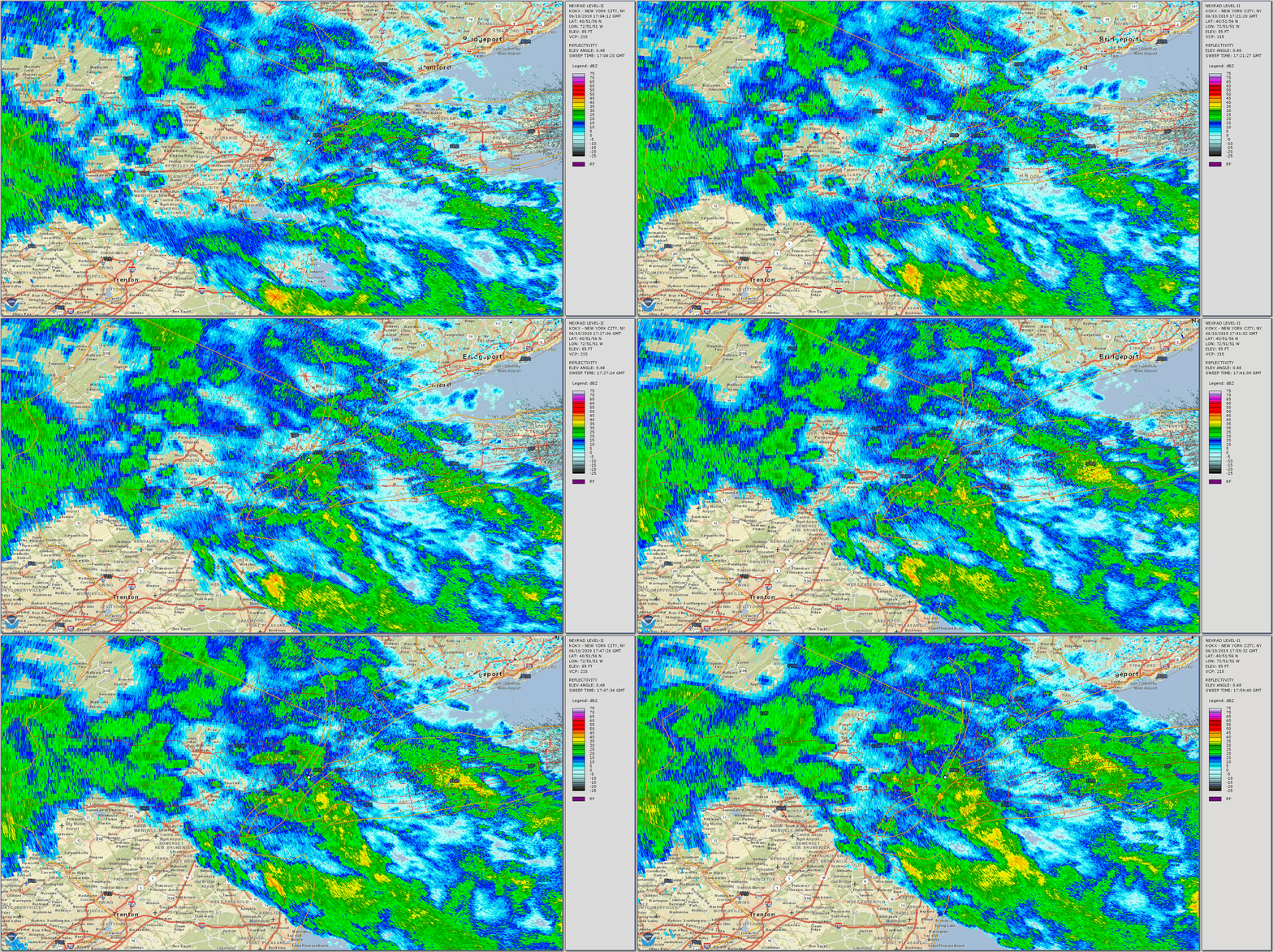
After dropping off a passenger during a routine weekly commuting flight, the noninstrument-rated pilot of the helicopter remained at the fixed-base operator (FBO) for about 2 hours, reviewing weather information before departing on the planned repositioning flight, which was the last flight leg of the commute. Before he departed, the pilot informed FBO staff that he saw a “twenty-minute window to make it out.” Had the pilot remained at the heliport, the helicopter owner would have incurred hourly, overnight, and landing fees depending on the length of stay. The extent to which those fees or other factors, such as the pilot’s obligation to reposition the helicopter as part of the normal commute, influenced his decision to depart could not be determined. The pilot departed into marginal visual flight rules (MVFR) conditions, and soon after takeoff, encountered instrument meteorological conditions (IMC). Although the pilot communicated that he was attempting to return to the departure heliport; shortly thereafter, he transmitted to heliport staff that he “didn’t know where he was.” Flight track data depicted an erratic flight path after takeoff, during which the helicopter climbed above the reported cloud base of 500 ft above ground level, and witness video recordings showed the helicopter flying in and out of clouds. About 8 minutes after takeoff, the helicopter descended rapidly and impacted the roof of a building. Examination of the airframe and engines revealed no evidence of any preimpact anomalies. The pilot’s decision to depart into MVFR conditions and the helicopter’s subsequent encounter with IMC were conducive to the development of spatial disorientation, and the helicopter’s erratic flight path and rapid descent were consistent with a loss of control due to spatial disorientation.
Analysis
- Primary failure mode
- Human factors
- First missed decision gate
- Pilot should have canceled the flight due to poor weather conditions.
NTSB coding
Evidence available
- Video
- ADS-B / radar
- Photos
- 19 docket documents
Docket documents19
- WITNESS INTERVIEWSinterview
- MAINTENANCE LOG EXCERPTSother
- MEMORANDUM FOR RECORD - AUTOPSYother
- PILOT TRAINING RECORDSother
- WEATHER ATTACHMENT 1other
- WEATHER ATTACHMENT 2other
- WEATHER ATTACHMENT 5other
- WEATHER ATTACHMENT 6other
- PHOTO ARRAYphotos
- WEATHER ATTACHMENT 4photos
- HELICOPTER GROUND TRACK - TABULAR ADSB DATAradar
- PLOTS OF HELICOPTER GROUND TRACKradar
- WEATHER ATTACHMENT 3radar
- TOXICOLOGICAL REPORTreport
- WEATHER STUDY REPORTreport
- WITNESS VIDEO 1video
- WITNESS VIDEO 2video
- MEMORANDUM FOR RECORD - WRECKAGE EXAMINATIONwreckage
- WRECKAGE RELEASEwreckage


Related mishaps
- EUROCOPTER FRANCE AS350B2
2023-09-09 · Silverton, WA
- PIPER PA-12
2023-02-04 · Porterville, UT
- CESSNA U206F
2022-03-05 · Newhalen, AK
- ROBINSON R44
2020-10-16 · Pahrump, NV
- Cessna 172
2019-10-10 · Aberdeen, SD · 1 fatality
- HUGHES 369
2018-08-21 · Granger, TX · 2 fatalities