RAYTHEON 400A near Fernandina Beach, FL — 2020-11-01
- Date
- 2020-11-01
- Location
- Fernandina Beach, FL, USA
- Airport
- FHB
- Aircraft
- RAYTHEON 400A
- Registration
- N456FL
- Category
- Airplane
- Highest injury
- Minor
- Fatalities
- 0
- Phase of flight
- Landing
Probable cause
The flight crew's improper decision to land with a tailwind on a wet runway, which resulted in a runway overrun. Contributing to the accident was the copilot’s early retraction of the speed brakes and the pilot’s decision to turn off the anti-skid system.
Contributing factors
Contributing to the accident was the copilot’s early retraction of the speed brakes and the pilot’s decision to turn off the anti-skid system.
NTSB narrative
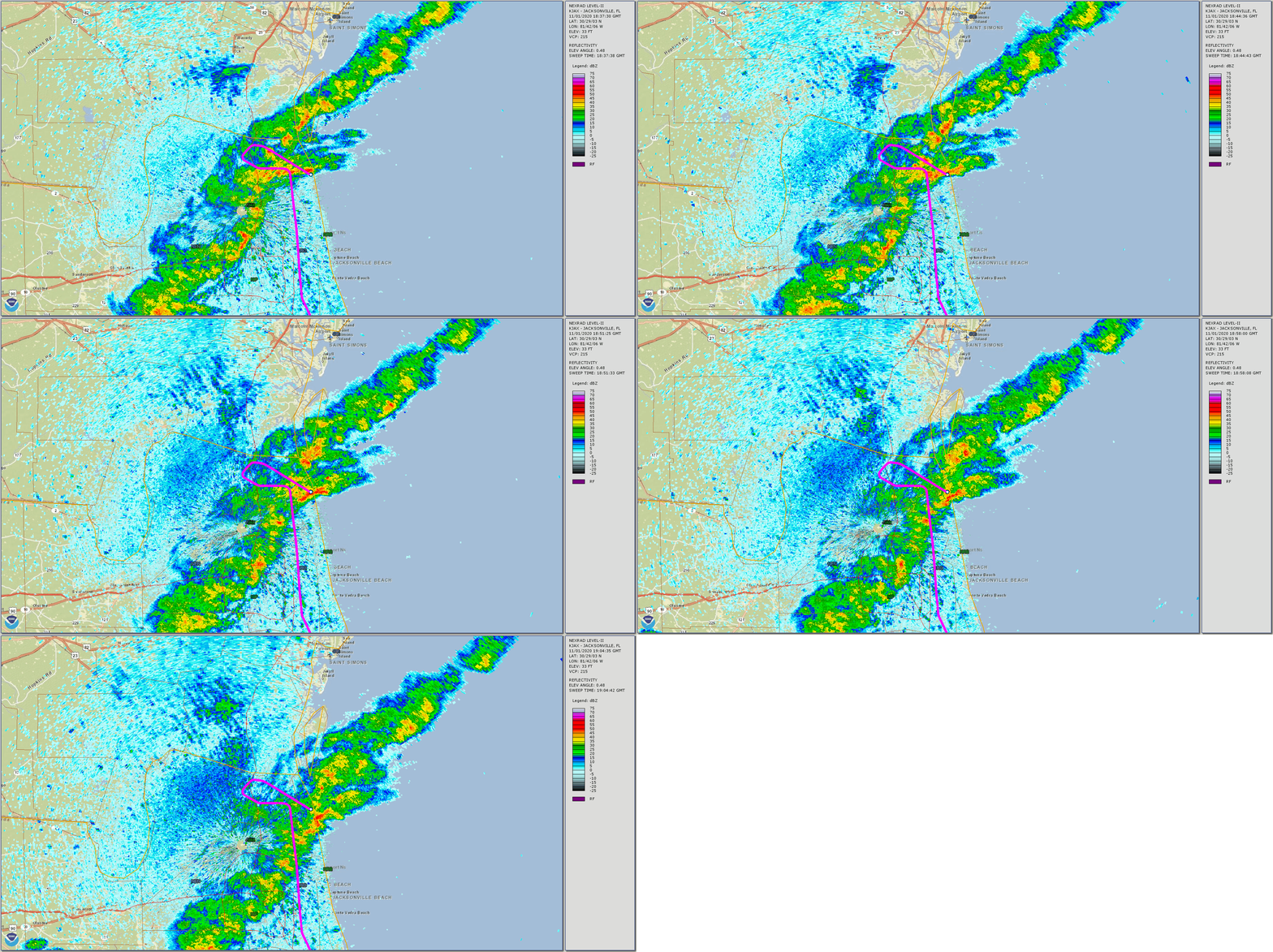
The air taxi flight departed in visual meteorological conditions. Upon arrival in the area of the destination airport, the flight crew of the business jet encountered instrument meteorological conditions and precipitation as a trough passed through the area. During the downwind leg of the instrument approach to runway 13, the copilot checked the automated surface-reported wind, which was from 110° at 4 knots gusting to 18 knots. Audio from the airplane’s cockpit voice recorder showed that, as the crew continued the approach, the copilot twice commented to the pilot that the actual wind for the approach was a tailwind (which he likely observed on the airplane’s primary/multi-function displays), at one point noting that the tailwind was more than 20 knots. The flight crew nonetheless continued the instrument approach, and after visually identifying the runway at a height of about 300 feet above the ground, landed the airplane. Data downloaded from the airplane’s flight data recorder showed that the airplane touched down at a groundspeed exceeding 120 knots, about 10 knots faster than the airplane’s reference approach airspeed (Vref). After the airplane touched down, the pilot believed that there was a problem with the airplane’s brakes, as he received “zero feedback” despite his attempts to slow down. During the landing the copilot deployed the airplane’s speed brakes for about 6 seconds before retracting them, about the time he commented to the pilot that they should abort the landing. The pilot declined to abort and directed the copilot to deactivate the airplane’s anti-skid system with about 1/3 of the available runway remaining. With no observed change in the airplane’s braking, the pilot attempted to slow the airplane by steering it from side to side on the runway, but it ultimately the airplane departed the end of the runway. The airplane came to rest in the soft soil and grass about 150 feet beyond the runway end, substantially damaging the wings and fuselage during the excursion. After the accident, the pilot observed that the runway was wet, but that there was no standing water. Postaccident examination and testing of the airplane’s braking system revealed no evidence of any preaccident mechanical malfunctions or failures. Review of recorded weather information, and a witness who landed shortly after the accident flight, confirmed that after the flight crew reported obtaining the wind from the automated weather reporting system at the airport and during their final approach to the runway, the wind had shifted from a slight headwind out of the southeast to a substantial tailwind out of the northwest. Based on the comments made by the copilot during the approach, the flight crew was aware of this tailwind condition, but did not discontinue their approach in favor of landing in the opposite direction, where a headwind would have prevailed. Landing overruns typically involve multiple cumulative factors, and may include a wet runway, landing with a tailwind, and the improper use of deceleration devices. During the accident sequence, the copilot mentioned twice the presence of a tailwind, and flight data recorder information indicated that the airplane’s groundspeed was higher than normal at touchdown. Thus, the pilots failed to recognize and take action in response to performance cues that indicated that the airplane would be landing with a significant tailwind. While the flight crew had accounted for the wet runway in their preflight performance calculations, the premature stowing of the speed brakes after touchdown prevented lift from being further decreased, which would have increased the weight on the airplane’s main wheels, thereby increasing braking effectiveness. In addition, turning off the anti-skid system precluded protection from skids and likely resulted in a longer landing roll along the wet runway. In summary, the flight crew should not have attempted the landing given the prevailing wind, and their actions further exacerbated the situation when they retracted the speed brakes early and turned off the anti-skid system. This resulted in the pilots’ inability to stop the airplane on the available runway surface and the subsequent runway overrun.
Analysis
- Primary failure mode
- Controlled flight into terrain
- First missed decision gate
- Deciding to continue the approach despite tailwind and wet runway conditions.
NTSB coding
Evidence available
- CVR
- FDR / data
- ADS-B / radar
- Photos
- 32 docket documents
Docket documents32
- COCKPIT VOICE RECORDER - SPECIALIST'S FACTUAL REPORTcvr
- FLIGHT DATA RECORDER - ATTACHMENT 1 (FDR TABULAR DATA FOR EVENT FLIGHT)fdr
- FLIGHT DATA RECORDER - SPECIALISTA��S FACTUAL REPORTfdr
- PILOT/OPERATOR AIRCRAFT ACCIDENT REPORT, NTSB FORM 6120.1form
- POST-ACCIDENT RECREATED WEIGHT AND BALANCE INFORMATIONform
- STATEMENT OF PARTY REPRESENTATIVES TO NTSB INVESTIGATIONform
- WITNESS STATEMENTS AND INTERVIEW SUMMARIESinterview
- ARRIVAL SEGMENT OF FLIGHTother
- ENROUTE SEGMENT OF FLIGHTother
- EXCERPT FROM AC-91-79A - EFFECTS OF COMPOUND FACTORSother
- EXCERPTS FROM AIRPLANE FLIGHT MANUAL - POWER BRAKE FAILUREother
- EXCERPTS FROM COLLINS PRO LINE 21 OPERATORS GUIDEother
- EXCERPTS FROM PILOT OPERATING MANUAL - BRAKE SYSTEM AND ANTISKIDother
- FUEL INVOICEother
- FUEL TICKETother
- KFHB - AIRPORT DIAGRAMother
- KFHB - RNAV (GPS) RWY 13other
- MEMORANDUM FOR RECORD - BRAKE SYSTEM EXAMINATIONother
- POST-ACCIDENT RECREATED TAKEOFF AND LANDING DATAother
- POST-ACCIDENT RUNWAY ANALYSIS DATAother
- WEATHER ATTACHMENT 1other
- WEATHER ATTACHMENT 2other
- WEATHER ATTACHMENT 4other
- WEATHER ATTACHMENT 5other
- WEATHER ATTACHMENT 7other
- PHOTO ARRAYphotos
- WEATHER ATTACHMENT 6photos
- ADSB - TABULAR DATAradar
- WEATHER ATTACHMENT 3radar
- WEATHER FACTUAL REPORTreport
- MEMORANDUM FOR RECORD - WRECKAGE EXAMINATIONwreckage
- WRECKAGE RELEASE AND EVIDENCE CONTROLwreckage

Related mishaps
- JEREMY PRICE SMITH SUPER CUB
2026-07-19 · Allisonia, VA
- CESSNA 172S
2026-06-17 · DEATH VALLEY, CA
- PIPER PA 31P 350
2026-04-17 · Ardmore, OK
- CESSNA 180K
2026-03-27 · Beloit, KS
- CESSNA T210
2026-03-11 · Upland, CA
- FRANKEWICH WALTER S-21 OUTBOUND
2026-01-19 · Madisonville, TN