ROBINSON R44 near Kailua, HI — 2019-04-29
- Date
- 2019-04-29
- Location
- Kailua, HI, USA
- Aircraft
- ROBINSON R44
- Registration
- N808NV
- Category
- Helicopter
- Highest injury
- Fatal
- Fatalities
- 3
- Phase of flight
- Descent
Probable cause
The helicopter’s encounter with a strong downdraft or outflow boundary while operating at a higher than recommended airspeed in turbulence which resulted in a low-G condition, excessive main rotor flapping, and an in-flight breakup when the main rotor contacted the cabin area.
NTSB narrative
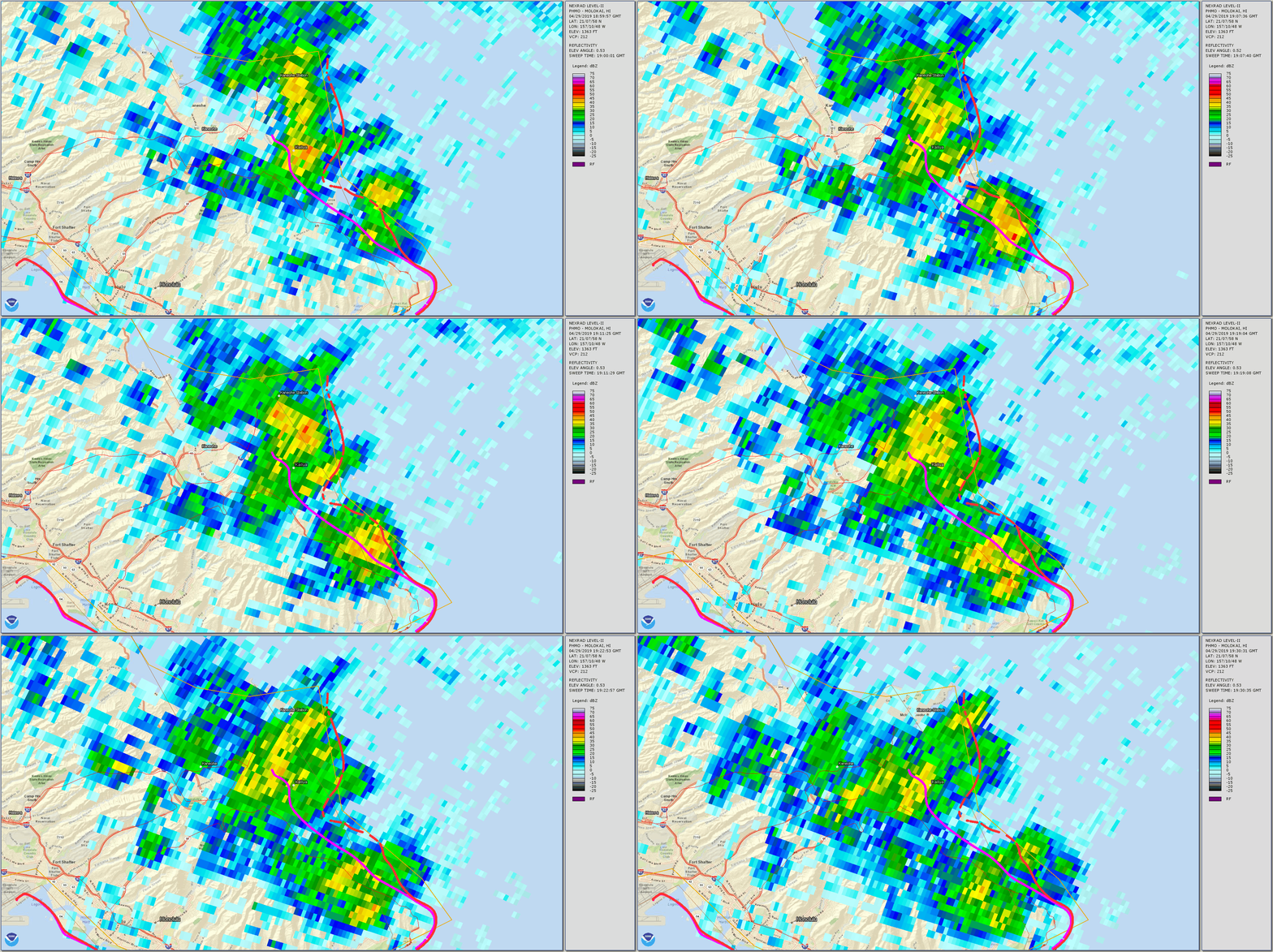
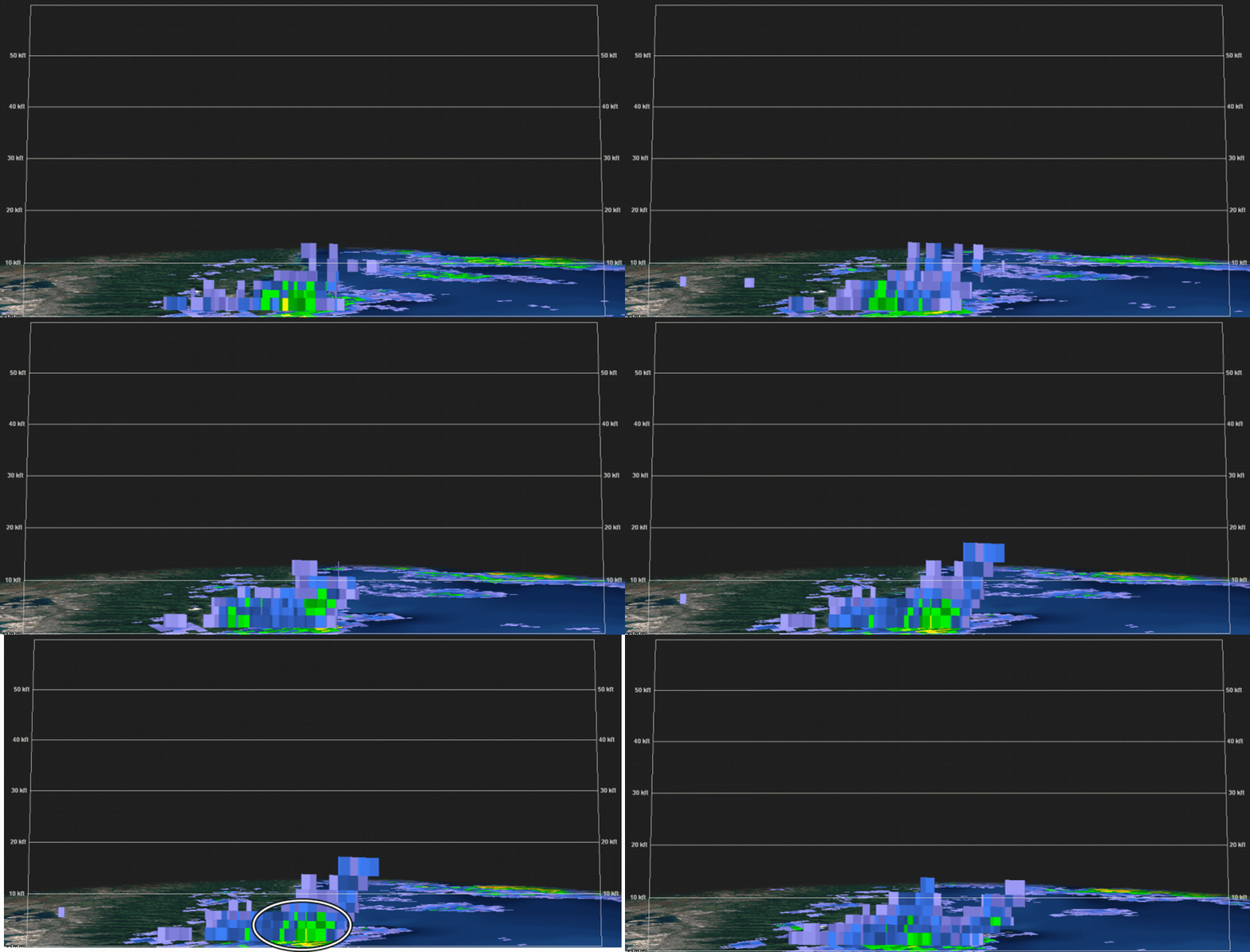
The pilot and two passengers departed on a helicopter tour flight around the island. Air traffic control radar and communications information indicated that the flight encountered deteriorating visibility conditions enroute. About this time, the helicopter slowed from about 108 knots (kts) to about 92 kts and initiated a turn. Shortly thereafter, radar data then indicated a rapid descent from an altitude about 1,700 ft above ground level. Witnesses near the accident site reported hearing the helicopter in the clouds and reported that it sounded as if it was very low. They then described the sound of metal hitting metal and saw pieces of the helicopter falling from the sky. Postaccident examination of the airframe revealed that the forward left roof and floor/chin exhibited damage consistent with contact from a main rotor blade. One main rotor blade exhibited a spanwise dent which displayed equally spaced score marks consistent with the row of screws in the windshield bow. The outboard portion of one of the main rotor blades, along with left fuselage and left side cabin components, were found early in the debris path. The main rotor drive shaft was bent about 20° above the swashplate. Arc-shaped scoring was observed on both sides of the main rotor hub adjacent to the pitch horns. Both teeter stops were crushed, and the driveshaft was dented. The droop stop bolt at the nut was sheard but remained in place. Examination of the engine revealed no anomalies and the evidence indicated that the engine was operating at the time of the accident. The accident helicopter was equipped with a two-bladed, semirigid rotor system. This design is susceptible to excessive rotor blade flapping, during periods of low-G’s or the pilot’s improper application of control inputs. Excessive rotor blade flapping can result in main rotor contact with the fuselage. A manufacturer safety notice stated, in part, that, when flying in turbulence, the helicopter should be slowed below a normal cruise speed to around 60 to 70 kts. Review of weather information for the area of the accident site around the time of the accident revealed a warm, moist environment that supported heavy rain showers that could produce unexpected strong downdrafts, reduced visibilities, wet microburst, and outflow wind conditions. At the time of the accident, weather surveillance radar reflectivity values indicated a descending core of 20 to 30 dBZ values descending towards the surface from above the accident site. The accident flight likely encountered this downdraft or outflow boundary, reduced visibilities, and rapidly changing and unexpected wind conditions. Which likely caused a low-G condition, excessive main rotor flapping, and an in-flight breakup when the main rotor contacted the cabin area.
Analysis
- Primary failure mode
- Loss of control
- First missed decision gate
- Pilot could have chosen to avoid the area with deteriorating weather conditions.
NTSB coding
Evidence available
- ATC audio
- Video
- ADS-B / radar
- 23 docket documents
Docket documents23
- PILOT/OPERATOR AIRCRAFT ACCIDENT REPORT, NTSB FORM 6120.1form
- RELEASE OF AIRCRAFT WRECKAGE, NTSB FORM 6120.15form
- STATEMENT OF PARTY REPRESENTATIVES TO NTSB INVESTIGATIONform
- STATEMENT FROM SECOND HELICOPTER N806NVinterview
- WITNESS STATEMENTSinterview
- AIRFRAME AND ENGINE EXAMINATIONother
- ON SCENE OBSERVATIONSother
- RECORD OF CONVERSATION - OPERATORother
- RECORD OF EMAIL - NTSB VEHICLE RECORDERS DIVISON REGARDING IN COCKPIT CAMERAother
- ROBINSON HELICOPTER COMPANY SAFETY NOTICE SN-32 A��HIGH WINDS OR TURBULENCEA��other
- ADS-B GOOGLE EARTH DATAradar
- ADS-B TABULAR DATAradar
- GOOGLE EARTH RADAR WITH CALCULATED GROUNDSPEEDradar
- N808NV AND N806NV GOOGLE EARTH TRACKSradar
- WEATHER - ATTACHMENT 1radar
- WEATHER - ATTACHMENT 2radar
- TOXICOLOGICAL REPORTreport
- WEATHER FACTUAL REPORTreport
- TRANSCRIPT OF RADIO COMMUNICATIONStranscript
- VIDEO OF ACCIDENT - COURTESY OF THE KAILUA RACQUET CLUBvideo
- VIDEO OF ACCIDENT, SECOND VIEW - COURTESY OF THE KAILUA RACQUET CLUBvideo
- VIDEO PROVIDED BY RESIDENTvideo
- WRECKAGE DEBRIS PATH - GOOGLE EARTHwreckage
Related mishaps
- MEYERS Midget 0100
2019-08-24 · Big Spring, TX · 1 fatality
- Piper PA32RT
2019-02-01 · Atlantic Ocean, AO · 2 fatalities